
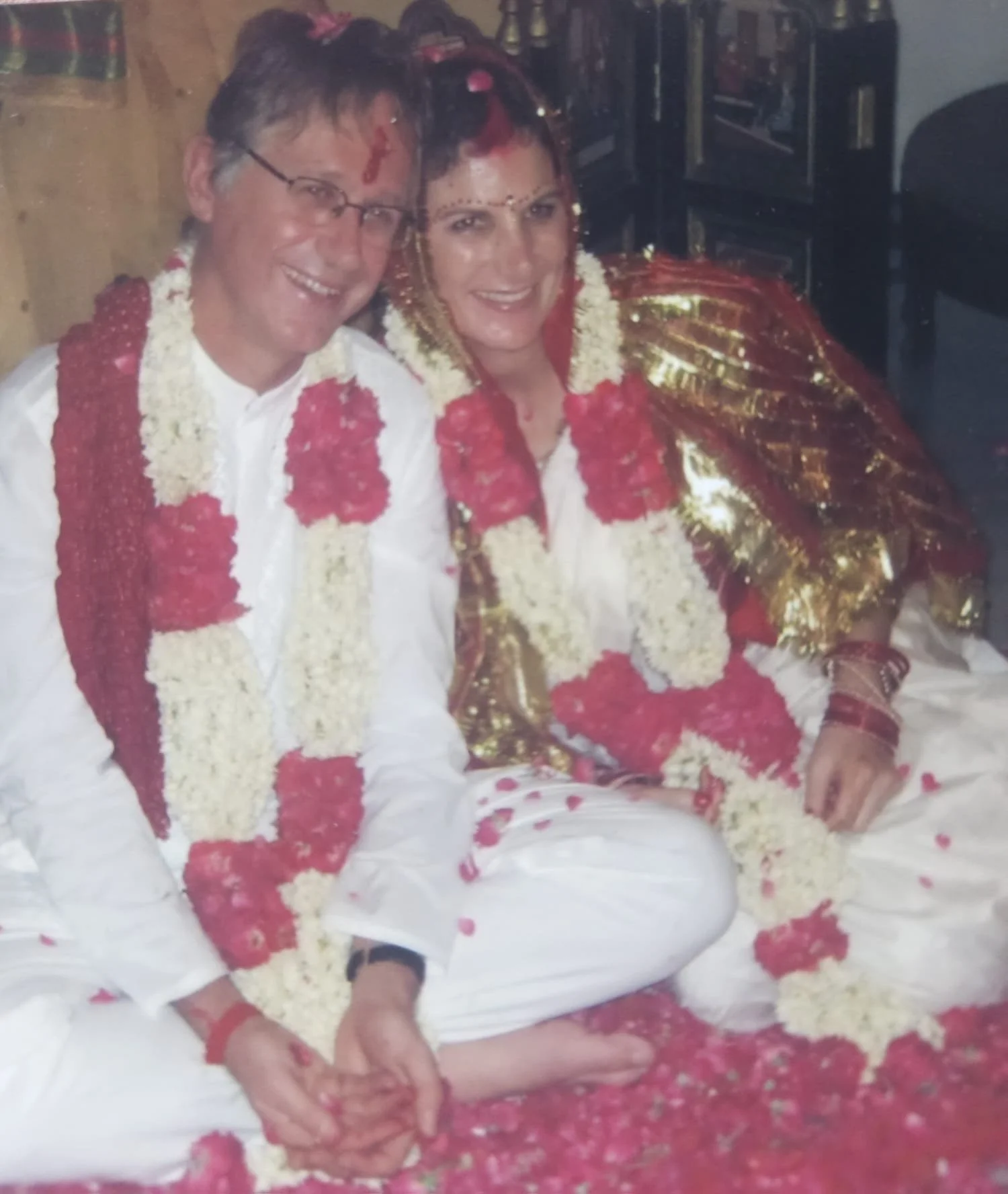
From the moment we are born, the one thing that is assured is that we will die. Yet, most people live in fear of death. It is a subtle force that runs through lives like the current of a gentle stream.
My husband, Henry, had an innate trust in life. He had a gentleness and peacefulness that all felt when they were in his presence. Were his first five years spent on rural Pennsylvania farmland, mostly alone or accompanied by his quiet Alderfer Mennonite grandfather, the key? His oneness with the natural world abounded — did it start in these early years? Silence was the silent sound that was at the center of Henry’s heartbeat. Was the Quaker tradition he was brought up in — the tradition of his mother and grandmother — to be in silent communion, to listen deeply to Spirit whispering to your heart, how Henry found silence his companion? Henry yearned for the Infinite, the Divine, as another current throughout his life. Were his decades of twice-daily meditation a key?
I came from a tumultuous, dysfunctional background. My more rajasic, fiery personality was an unlikely match, but together we formed a dynamic couple. The years by Henry’s side calmed the fires within me, and I began to touch that same place of tenderness and trust — of deep peace and connection. From the beginning, we both connected from a place beyond the day-to-day, but instead from that heartbeat of the universe calling us Home.
Henry made his final journey just days ago. The peace that pervaded was palpable. His yearning for union with the Infinite source of love, from wavelet to oceanic bliss, merged. I can only rejoice in his ultimate last journey, witnessed in awe and blessings beyond.
How can I be bereaved? Forty-five years ago, we vowed we would be spiritual companions, to help the other and support our own journeys to our Home of homes. Our true Home. Now he leaves me with inspiration. His silence and gentle way of being are embedded in me even deeper.
Our two daughters were graceful helpers during those difficult, then peace-filled, final days. My youngest shared her deep calling to serve; clearly, she said it was a karmic pull, and she felt serving as her Dharma. She was the most gentle, respectful, tender caregiver in those days of agonizing pain. Heart open, she was able to connect in deep trust so her father’s heart, through the confusion and traumatizing pain, could be buoyed by love and held in safety. When my eldest arrived, we formed a seamless team that connected us even deeper, if that were even possible. Moments of trauma, grief, shock, and letting go have their blessings always. Creating a bubble of love, silence, and an energy that held Henry in his final days allowed him to culminate his journey from his source of being — from those first years of gentle silence, the decades of inner stillness, the always yearning to melt into the oceanic bliss of our true nature and ultimate homecoming.
As a wife of forty-five years, we had a connection that reaches beyond lifetimes. We had a full life of love, shared heartbreaks, and everything in between. We loved raising our two daughters and basked in the joy of being grandparents. The intertwining miracle of life continuing, as if a spoke on the wheel of life, with countless generations before us as well as those to come.
In the last decade, our marriage had slowly changed to one of caregiver to a spouse with Alzheimer’s. The commitment — like in the Hindu vows we took when celebrating our 25th wedding anniversary (a time when you are supposed to reaffirm your wedding vows), when we were living in New Delhi — marriage is beyond the “do you love me” more Western approach, to the more karmic connection of this is meant to be, and it is for the higher good — this is about something much bigger and greater — at least the potential is there. In my case, I will say this part of our long marriage helped unbind the ties of expectation. It helped let go of what the cultural narrative deems important: what you do, if you drive, how productive you are, what dates you went here or there, even how you dress or spend your time. Indeed, Alzheimer’s sheds the layers of identity Western culture holds so tightly. It settled me into a deeper connection of heart. It helped me navigate from a compass magnetized by kindness.
The companionship I knew in more than thirty years of marriage had faded, the responsibilities of caregiving consuming most of my time and also my psyche. So yes, there is a sense of relief. It is two weeks today from Henry’s passing. I am releasing much of what I had been holding. I also sit with a tremendous sense of gratitude that Henry saved himself and me from the advanced stages of Alzheimer’s. I am the lucky one. Through this journey, I have become friends with other women whose husbands are beginning this journey. Other new-found friendships of instant bonding say they are not as lucky. They clearly express that their husbands would not have wanted to live in advanced memory care, where they are now. Just one year ago, Henry and two others seemed to be at a similar stage.
I doubt I will join a bereavement group, just as I did not join a support group for caregivers of Alzheimer’s. I feel whole. I feel a certain sense of gratification. A completeness. I will continue to sit in this in-between time as I soak in the beauty and awe of all that has just transpired. Once I go back into the world, similar to leaving a long meditation retreat or even when integrating a psychedelic journey, things will feel different. I am forever changed. A transformation of sorts invites in deep mindfulness moving forward.
Fresh narratives that support a mindful approach to dementia do not end for the caregiver when the person dies. I share a glimpse of my continuing journey in hopes that it can support yours, or someone you know who wants to walk with each step from the heart of mindfulness.
- Lauren Alderfer, PhD.